



Owner’s equity is calculated by adding up all of the business assets and deducting all of its liabilities. Bench simplifies your small business accounting by combining intuitive software that automates the busywork with real, professional human support. A professional tax advisor from 1-800Accountant can use your SOE and other reports to help you save on taxes and stay compliant year-round. That might include advice on S corp elections – so your income and compensation are handled in the most tax-efficient way. That’s where a good CPA or online bookkeeping tax professional with experience in your industry becomes essential.
Statement of Owner’s Equity: Key Components
- These experts help interpret trends and offer guidance based on your equity position.
- It’s essential to detail each withdrawal or at least provide a cumulative total for clarity.
- A higher proportion of debt increases interest expenses and liabilities, while more equity can dilute ownership and affect earnings per share.
- With that, you can see the reaffirmed balance, which is the sum of the shareholder’s equity with alterations because of the sorts of variations and alterations.
- It also enables you to separate earned profits from outside contributed capital or withdrawals, which is useful when deciding how to allocate resources or plan for growth.
Intuit accepts no responsibility for the accuracy, legality, or content on these sites. If you own a house worth $300,000 but you have a $120,000 mortgage against it, your equity is $180,000. Breaking it down, the $300,000 house is your asset while the $120,000 debt is your liability. Subtracting the liability from your asset leaves you with $180,000 of equity. You’ll have your Profit and Loss Statement, Balance Sheet, and Cash Flow Statement ready for analysis each month so you and your business partners can make better business decisions. At its core, brand equity refers to the value premium your company generates from a product with a recognizable name when compared to a generic equivalent.
- Many businesses rebound by adjusting strategies, improving cash flow, or finding new capital injections to resuscitate equity back into the positive.
- Following this, the document details any new investments made by the owners during the current period.
- Remember to recalculate your owner’s equity regularly, as it can change with fluctuations in your assets and liabilities.
- Tools like QuickBooks or FreshBooks—especially when paired with expert oversight—can help you track equity in near real time.
- “We do, what a full fledged accounting department does, at a fraction of the cost!
The Importance of Understanding Owner’s Equity
It may also be known as shareholder’s equity or stockholder’s equity if the business is structured as an LLC or a corporation. An owner’s equity total that increases year to year is an indicator that your business has solid financial health. Most importantly, make sure that this increase is due to profitability rather than owner contributions. In contrast, the cash flow statement — or statement of cash flows — tracks the changes in a company’s cash and cash equivalents over a period of time.
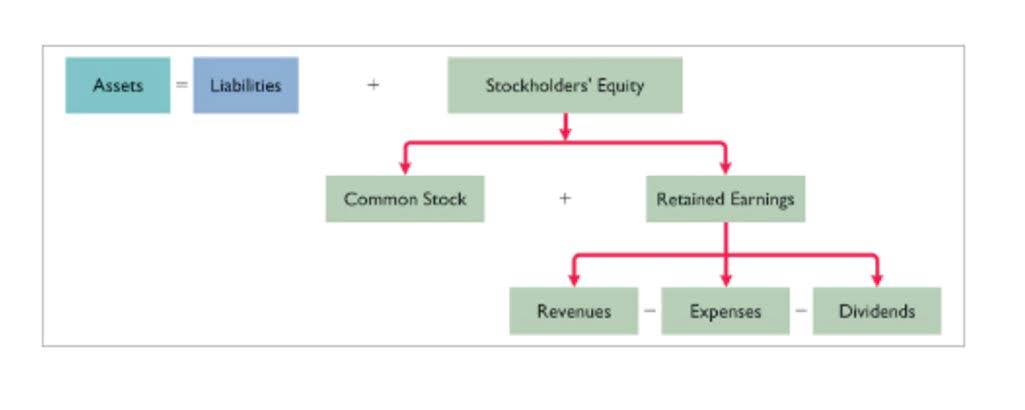
Aid in decision-making and financial analysis:
- A property dividend may be declared when a company wants to reward its investors but doesn’t have the cash to distribute, or if it needs to hold on to its existing cash for other investments.
- When firms earn a profit, they have two options as to what to do with their earnings.
- They can omit the statement of changes in equity if the entity has no owner investments or withdrawals other than dividends, and elects to present a combined statement of comprehensive income and retained earnings.
- Treasury stock consists of shares that the company has repurchased from shareholders, which can be reissued or retired, affecting the overall equity and ownership structure.
- In summary, the stockholders’ equity statement serves as a vital tool for both management and investors to monitor and evaluate the company’s financial strategies and ownership dynamics.
Stockholders’ equity represents the residual interest in the assets of a company after deducting liabilities. It is a crucial component of the balance sheet, providing insights into the financial health and stability of a business. By analyzing stockholders’ equity, stakeholders can assess the company’s ability to generate profits and manage its capital structure Accounts Payable Management effectively. Most small business owners started their companies because they were experts in providing a good or a service — not at balancing a book.

The cash flow statement (CFS) is, therefore, more comprehensive with regard to understanding the financial health of a company, but does statement of stockholders equity not offer the same type of transparency into any specific line item. Capital is increased by owner contributions and income, and decreased by withdrawals and expenses. The Statement of Owner’s Equity, which is prepared for a sole proprietorship business, shows the movement in capital as a result of those four elements. The statement of changes in equity of a sole proprietorship is the easiest to be prepared since it is more simple and involves less components compared to a partnership and a corporation.

Company
The truth is that brand equity can result in tangible or intangible value, both positive and negative. Report the capital balance at the beginning of the period reported – or the amount at the end of the previous period. Remember that the ending balance of the last period is the beginning balance of the current period. In this case, it would be Statement of Changes in Owner’s Equity, Statement of Owner’s Equity, or simply Statement of Changes in Equity. It’s also the total assets of $117,500 minus total liabilities of $22,500. Depending on how a company is owned or operated, owner’s equity could be attributed to one owner or multiple owners.
